
Where Online Gambling Is Legal: Global Laws and Regulations Explained
Online gambling has become one of the fastest-growing sectors in the digital entertainment industry. Millions of players around the world access online casinos, sportsbooks, and poker platforms every day. However, the legal status of online gambling differs widely depending on the country or region.
Understanding where online gambling is legal is essential for both players and operators. Some countries have fully regulated markets with strict licensing requirements, while others maintain grey areas or enforce outright bans. In many cases, gambling laws continue to evolve as governments attempt to balance consumer protection, economic opportunities, and responsible gaming policies.
This guide explores where online gambling is legal worldwide, including regulated markets, partially regulated regions, and countries where online gambling remains prohibited.

What Determines Whether Online Gambling Is Legal?
Online gambling laws are usually shaped by several key factors, including cultural attitudes toward gambling, government policies, and economic interests. In general, jurisdictions tend to fall into three main categories:
- Fully regulated markets where online gambling is licensed and supervised by government authorities
- Grey markets where gambling laws are unclear or partially regulated
- Prohibited markets where online gambling is banned
Regulated markets typically provide the safest environment for players because operators must follow strict licensing standards and consumer protection rules.
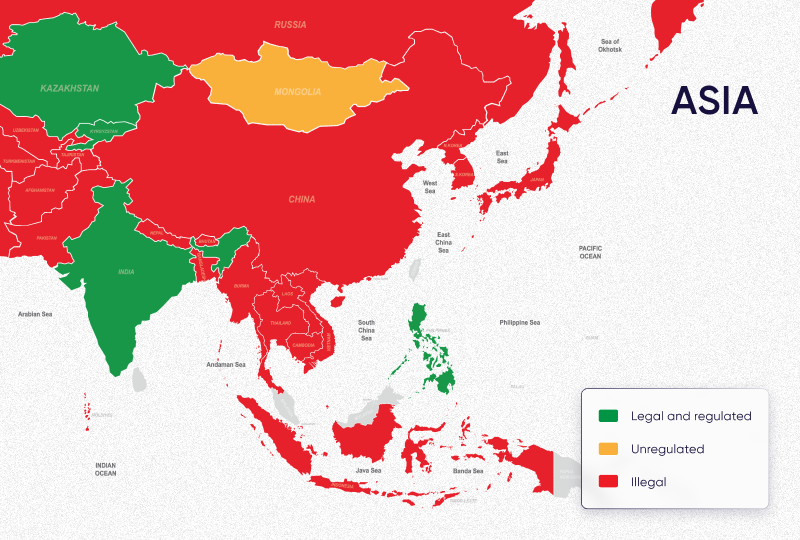
Countries Where Online Gambling Is Legal and Regulated
Many countries have introduced licensing frameworks that allow companies to operate legal online casinos and sportsbooks. These systems are designed to ensure transparency, prevent fraud, and promote responsible gambling practices.
Europe
Europe is widely considered one of the most developed regions for regulated online gambling markets. Several countries have comprehensive licensing systems overseen by government regulators.
One of the most established regulatory bodies is the UK Gambling Commission in the United Kingdom. The commission licenses online casinos, sportsbooks, and betting platforms while enforcing strict standards related to consumer protection and responsible gambling.
Other European countries with regulated online gambling markets include:
- Spain
- Italy
- Germany
- Sweden
- Netherlands
- Denmark
Each country operates its own licensing system, although regulations may differ in terms of taxation, advertising rules, and available gambling products.
Some European countries also maintain state monopoly systems. For example, gambling activities in Finland and Norway are primarily controlled by government-run operators.
North America
The legal landscape for online gambling in North America varies by jurisdiction.
In the United States, gambling laws are determined at the state level. Several states have legalized online casinos and sports betting in recent years, including:
- New Jersey
- Pennsylvania
- Michigan
- West Virginia
- Connecticut
These regulated markets have experienced rapid growth since the landmark Murphy v. NCAA decision in 2018, which allowed states to legalize sports betting.
In Canada, regulation is handled at the provincial level. The province of Ontario has established one of the most developed online gambling markets in the country, allowing licensed private operators to offer digital casino and sports betting services.
Latin America
Latin America has become one of the most promising emerging regions for online gambling regulation.
Several countries are actively introducing licensing frameworks to regulate the industry and generate tax revenue. For example, Colombia became the first Latin American country to fully regulate online gambling, while Brazil has been working toward broader legalization of sports betting and digital gambling platforms.
Other countries such as Mexico and Argentina have also introduced regional or partial regulations.
Asia-Pacific
The Asia-Pacific region presents a more complex regulatory landscape.
In Australia, the Interactive Gambling Act 2001 prohibits online casino operators from offering real-money gambling services to local residents. However, online sports betting is legal when provided by licensed operators.
Meanwhile, countries such as Philippines have established regulatory frameworks for offshore gambling operators through licensing authorities.
Other markets in Asia remain more restrictive or operate within legal grey areas.
Countries Where Online Gambling Exists in a Legal Grey Area
Some countries have not yet introduced clear legislation governing online gambling. In these jurisdictions, local governments may not issue licenses but also do not strictly prohibit players from accessing offshore platforms.
Examples of markets that often fall into this category include:
- Mongolia
- Kosovo
- Andorra
In these regions, players may still participate in online gambling using international websites licensed in other jurisdictions.
However, the lack of clear regulation means players may not receive the same consumer protections available in regulated markets.
Countries Where Online Gambling Is Illegal
In certain countries, online gambling is strictly prohibited due to legal, cultural, or religious factors.
For example, gambling is banned in China, except for government-run lottery systems. Similarly, strict anti-gambling laws exist in several Middle Eastern countries.
Examples of jurisdictions where gambling is largely prohibited include:
- Saudi Arabia
- United Arab Emirates
- Qatar
In these countries, gambling activities may carry severe penalties, and authorities may block gambling websites or restrict financial transactions linked to online betting platforms.
Why Online Gambling Regulation Is Important
Legal regulation plays a crucial role in ensuring the safety and integrity of the online gambling industry.
In regulated markets, licensed operators must comply with strict requirements, including:
- Responsible gambling programs
- Player identity verification (KYC)
- Anti-money laundering measures
- Independent game testing and auditing
- Secure payment systems
These safeguards help protect players from fraud and ensure that games operate fairly.
At the same time, regulated gambling markets provide governments with significant tax revenue and create opportunities for technological innovation and job creation.
The Future of Global Online Gambling Laws
The global online gambling industry is expected to continue expanding as more countries recognize the potential economic benefits of regulation.
Several jurisdictions are currently considering new licensing frameworks or reforms aimed at modernizing gambling legislation. Regions such as Latin America, parts of Africa, and Asia are likely to become key areas for future growth.
As the industry evolves, governments will continue seeking ways to balance consumer protection with the opportunities presented by digital gambling platforms.
For players and operators alike, staying informed about where online gambling is legal is essential in navigating this rapidly changing global market.